

When presenting at the IPTA conference last week in Adelaide, I discussed the recent New Zealand
Court of Appeal decision in Zuru v Lego. Blake Knowles of IP Australia asked a question from the
floor, whether the prominence of the LEGO mark in the compatibility statement had, or should have
had, a bearing on the outcome. I said that the Court of Appeal had given the matter careful thought
and decided that, in that particular case, the answer was no.
Here is the compatibility statement in issue:
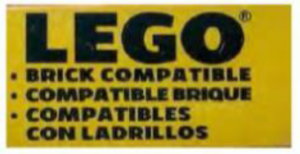
After the talk, I realised that, when answering the question, I should have also mentioned that
Zuru had put forward a number of other proposed compatibility statements and sought Lego’s consent to use them on its packaging. Lego did not provide consent, and Zuru sought
declarations from the Court that one or more of these compatibility statements would not infringe
the LEGO trade mark.
Here are the three proposed compatibility statements.


As can be seen, the word Lego is either less prominent or at least equally prominent to another word in the statement.
The trial judge, Lang J, stated at [39] of the first instance decision that the proposed compatibility statements were problematic, given that Zuru was seeking declaratory relief in relation to a course of action it may (or may not) undertake in the future, and it was, in effect, asking the Court for its advice or opinion on these issues. The trial Judge indicated at [41] that the declarations sought may serve a
useful purpose in providing Zuru with a degree of certainty moving forward. Notwithstanding this,
his Honour concluded that the declarations went beyond asking the Court to declare the law and
instead required it to apply the law to an insufficiently defined future issue.
Perhaps, in hindsight, it would have been preferable to express a view on these options, because it
would have provided guidance not just to Zuru but to the public at large on the
question of “prominence” and its bearing on wider the legal question.