In Part 4 of this series I dealt with derivative works, homogenisation and pastiche. I also referred to Eleonora Rosati’s article discussing AG Emiliou’s advice to the CJEU in what has turned out to be a groundbreaking case, Pelham II – dealing with the question of pastiche. In Part 5 – I asked whether generative AI with or without human support can be genuinely creative. Before looking at that issue in more detail, I need to circle back to the question of pastiche as the Grand Chamber released its decision Pelham v Hütter, on 14 April 2026, which is being touted as one of the most important, and probably one of the longest running copyright cases in recent European history.
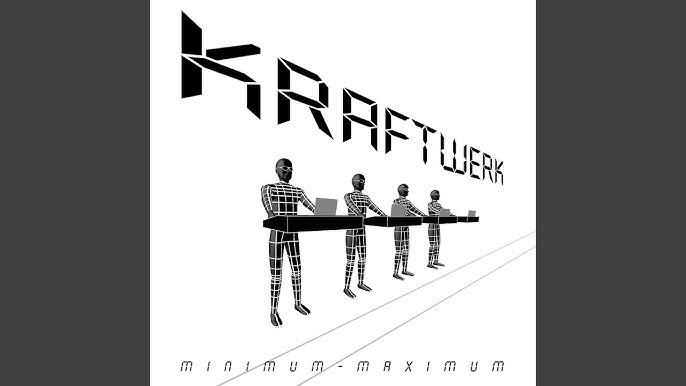
The dispute started back in 1999 when Kraftwerk’s Ralf Hütter sued producer Moses Pelham over a two-second drum rhythm sampled from the 1977 track Metall auf Metall. It’s been many years since I last listened to a Kraftwerk album, but anyone who does so well immediately recognise Kraftwerk’s distinctive DNA, when reacquainted with Metall auf Metall.
Pelham slowed the sample down but looped it as a repeating bass line in Sabrina Setlur’s song Nur Mir. The Kraftwerk original is accessible on YouTube:
- the original rhythm begins around the 0:18 mark of “Metall Auf Metall”
- Sabrina Setlur: the sampled beat is audible when “Nur Mir” starts
The Nur Mir track also sampled segments from three other songs, by Bob James, Anne Clarke and Run-DMC, so it was a true compilation of other artists “borrowings”. However, it is Kraftwerk’s Hütter who has pursued this case for the last 30 years. The case is important not because of the sample itself but because of the fact that it confronts the important question in copyright law, is where protection ends and creative freedom begins. The answer lies in a “fair use” concept that neither Australian nor New Zealand copyright law recognises at this point in time, but in my view, should. The concept is “pastiche”.
The answer, in Europe, now turns on a concept that New Zealand copyright law does not recognise at all — pastiche. First, a bit more about the case. I won’t step you through the numerous decisions and different permutations that arose. In short, different branches of the European Courts have found that Hütter’s rights could be infringed even though a very short clip of the track had been taken unless Pelham, the alleged copy, could show that it had been significantly modified i.e. beyond recognition.
The Grand Chamber’s answer is important because it held that pastiche is an autonomous concept of EU law, covering creations that evoke one or more existing works, while still remaining noticeably different from them. The alleged copy also has to engage with those works in an artistic or creative dialogue that is recognisable as such.
The Court summarised the position into four key propositions. First, pastiche is different to parody. No humour is required. It encompasses homage, tribute, stylistic imitation, and any meaningful creative engagement with a source. Secondly, the test is objective. This means that the user does not need to show its subjective intent was to create a pastiche. She or he simply needs to illustrate that a recognisable dialogue with the source has occurred, and this would be apparent to an informed audience.
This in itself is an interesting approach because it introduces a requirement for the question to be looked at through the eyes of the skilled person, akin to the skilled person in the art, well-known to patent practitioners. Thirdly, the new work (the alleged copy) need not itself be an original creation in the copyright sense. Interestingly, even if this work is found to lack originality the exception may still apply.
Finally, the exception only applies in special cases, and it cannot conflict with normal exploitation of the work. Nor can it prejudice the legitimate interests of the copyright owner. It follows that hidden imitations, plagiarism, and reproductions that add no artistic value of their own do not qualify. In other words, the user has to illustrate that there is genuine creative engagement.
Analysing the case from an Australasian perspective it is important because it shows the way the European courts are developing fair use concepts for example in the case of parody provided the second work (the alleged infringing work) evokes an existing work while being noticeably different, and that it constitutes an expression of humour or mockery. Pelham II extends this thinking to pastiche, parody’s non-satirical counterpart and allows the law to deal with a range of modern practices (many would say acceptable forms of “creative practices” while others would label them nothing less than “plagiarism”). These principles also address different forms of stylistic tribute, and in the years ahead will no doubt be deployed to deal with evolving forms of AI-assisted creativity that draw on existing aesthetic traditions.
In the United Kingdom, a parody and pastiche fair dealing exception (in New Zealand, Australia and the United Kingdom the copyright regime applies a fair dealing, rather than a wider fair use concept, as the US, and increasingly now the EU does), has been in place since 2014. Though not yet extensively developed by UK courts, the Pelham II reasoning, while not binding, is likely to be persuasive in any future UK cases. Australia has an exception permitting fair dealing for purposes of parody or satire. New Zealand’s Copyright Act 1994 contains no equivalent provision. New Zealand’s fair dealing provisions are limited in scope and out of step with our main partners.
The practical reality is that New Zealand creators who engage in parody, satire, tribute, stylistic homage, or any form of creative borrowing from existing works do so at their peril and without legislative protection. The long-awaited and long-stalled review of the New Zealand Copyright Act needs to be addressed.