In this, my last post in this series, having looked in the previous post (Part 7) at joint authorship as a possible yardstick for law reform in this area, I put forward some potential solutions.
Before I do so, we shouldn’t lose sight of the issue of cognitive debt. In one of my earlier articles, I discussed an MIT study that illustrated that AI assistance reduces neural activity in the brain. I also referred to other researchers who described this as “cognitive debt”. I suggested that this had serious implications for copyright law’s long-held assumption about human creativity, particularly as we increasingly rely on AI to help us create.
However, it’s not all doom and gloom. A new study[i], published in the Journal of Applied Psychology, finds that AI may in fact, make some, but not all, workers more creative. The study is discussed by Sarah Bregel[ii], who notes that individuals who displayed strong “metacognitive skills” performed better, creatively speaking. Bregel explains that this means those of us who “could reflect on what information they lacked, keep track of how effective their approach is, and reassess their approach when noticing a lack of progress, and refine their AI prompts accordingly.” In other words, those of us who can understand and adapt our own thinking and learning processes. In my view, this means that those of us who can collaborate successfully with AI, including in the creative process, and understand how that interaction works, are more likely to succeed.
Coming back to potential solutions, unfortunately, as often happens with technology, the law is struggling to keep up with developments in the AI space, or in the case of New Zealand, naively ignoring the problem and hoping it solves itself. Here are a few examples. Generative AI, in particular AI image generators, use unlicensed copyrighted works, seemingly with impunity, and increasingly unregulated large language models raise a host of policy issues. The proliferation of deepfakes continues, largely unchecked. Today, they are so sophisticated that we cannot tell what is fake and what is real. These developments have huge implications for societal trust and the very existence of democracy itself. In New Zealand, a private member’s bill[iii] to outlaw the sharing of sexually explicit deepfakes is a good start, and to be applauded. However, in my view, it only tackles the tip of the iceberg and I have submitted to the select committee that it should be extended to all deepfakes, not only those that are sexually explicit. And at the same time, we have good old-fashioned human brilliance and creativity that needs to be fostered and protected against the invaders, who are not just knocking on the gates – they are well within the city’s walls.
In my view, this is not a situation where tinkering will do. Instead, when it comes to authorship we need to repurpose the whole structure of copyright law. First, we need to adjust and strengthen traditional authorship rules, in so far, as they apply to human authors.
Secondly, we need to accept that humans and AI are increasingly collaborating and that these works need to be recognised as eligible for copyright protection, while being treated differently. This is where the concept of orchestration comes into play.
Thirdly, we have pure AI creations. That is, works created solely by AI, with no real human involvement in the creative process. In these circumstances, my suggestion is to modify the commissioning rule[iv] so that the person, whether an individual or a corporation, commissions the creation of an AI work and owns it. That means that the AI-authored work would attract copyright protection but be treated differently, because AI has no legal personality as such, and it cannot and should not be able to own property. It is after all, just a tool, albeit a very smart one.
To bring copyright law into the 21st century, rather than clinging to 20th-century concepts of authorship supported by joint and common authorship, I propose introducing a new three-tier form of authorship to address the serious challenges I have outlined above.
Tier 1 – would assess both originality and contribution by examining threshold human involvement through minimum creative input requirements, the assessment of cognitive engagement level, and the evaluation of human decision-making in the creative process.
Tier 2 – would focus more on originality in orchestration by examining the degree and quality of the contribution, creativity in prompt engineering and iteration, and the uniqueness of human creative choices.
Tier 3 – would determine the reflection of personality through evidence of individual aesthetic judgement, consistency with the creator’s broader body of work, and demonstrable human creative vision. This assessment would focus on whether the work has a high degree of originality and on where exactly that originality comes from. This assessment would be highly fact-specific and directed at identifying who the true author is, by reference to a far more nuanced standard that looks at where the contribution actually comes from and the extent to which it is responsible for creating the particular work.
If this approach is adopted, the timing of AI intervention should be considered when assessing originality. Early AI use should require a higher threshold for demonstrating human creativity. Late AI use should recognise preliminary human cognitive investment, and iterative collaboration should focus on overall creative contribution. In my view, any new legislative regime should still require at least some human involvement in assessing originality.
Law reform efforts would also need to create flexible fair use/fair dealing provisions for AI-assisted transformative works, implement disclosure requirements for significant AI assistance in creative works, and possibly develop sui generis protection for AI-generated content with minimal or no human input. I am not suggesting that human creativity and original thought should be diminished or downgraded in any way. On the contrary, human artistry and genius must continue to be recognised, properly rewarded and protected. However, at the same time, there is no point in ignoring the existence of a whole new body of creative works that deserve protection in their own right.
There is a school of thought that AI cannot create, it simply learns and regurgitates. Leading New Zealand actor Jennifer Ward-Lealand pointed out: [v] “…there is no such thing as an AI actor.” “An actor is a human. The AI is just machine-learning”. While I certainly agree with her comment that AI is a real threat to actors’ work, I don’t agree that AI is just machine learning. There are plenty of examples[vi] where it has created amazing art forms. That is the problem, but it is not a problem we can wish away. My argument is that without public consultation and careful legislative change, AI work will remain in an unregulated, lawless no-man’s land, while at the same time undermining existing authors’ rights, which is hardly desirable. Given AI’s rapidly acquired ubiquity and global reach, international harmonisation of authorship standards is crucial. This is where government involvement is critical. So is WIPO’s leadership.
To conclude, the AI revolution in creativity clearly requires copyright law to evolve beyond traditional assumptions about solitary human authorship. The emerging paradigm of “shared authorship” requires new frameworks that can distinguish between mere technical operation and genuine creative orchestration. Success requires balancing innovation incentives with protection for human creativity, ensuring that copyright continues to serve its fundamental purpose of promoting the arts and sciences, but in a rapidly transforming AI world order.
The challenge lies not in preserving once-sound but now increasingly outdated concepts of authorship. It lies in developing legal frameworks that recognise not just the complexity but the inevitability of human-AI creative collaboration. I believe this can be done while maintaining traditional standards for originality and creative contribution. At the moment, there is legitimate concern that AI is going, not only to displace, but entirely replace human artists, and in the process destroy the entire creative ecosystem; a system that reveres and endeavours to reward artistic excellence and rewards artists’ creativity, skill, and effort.
I don’t think these concerns are exaggerated. However, there is no point in denying the inevitable. We need to find ways to harness AI as a collaborative tool and co-creative partner that magnifies the potential of artistic expression, rather than seeing it as an adversary that first undermines and then takes over the creative process itself. AI has no reason to do that. However, the billionaires who have built and own the AI platforms have a very different agenda, and civil society has to step up and mould the law and social policy in a way that protects artists and creators, and in doing so, humanity itself.
==================================================================
Endnotes:
[i] How and for whom using generative AI affects creativity: A field experiment.
[ii] Sarah Bregel, Creativity at Work, 30 July 2026, Generative AI could boost creativity, but only for some workers – Fast Company
[iii] https://www.act.org.nz/news/new-bill-targets-sexually-explicit-deepfakes
[iv] Under Section 21(3)(a) of the New Zealand Copyright Act 1994 the first owner of copyright is the person who commissions, and pays or agrees to pay for a range of copyright works which cover the bulk of copyright works, with the exception of literary works.
[v] https://cliveelliottkc.com/artists-and-the-threat-of-ai/
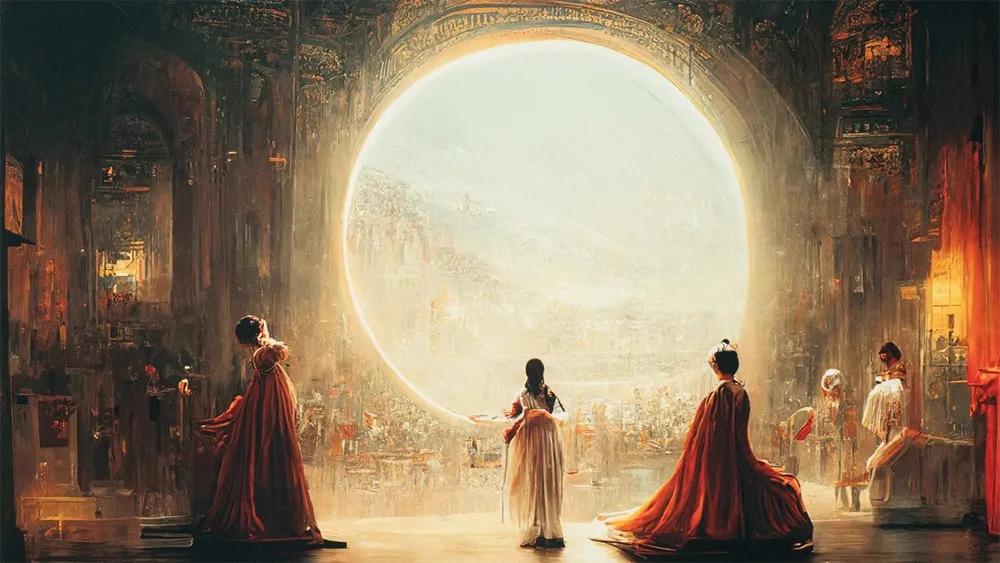
[vi] The image in my blog at https://cliveelliottkc.com/artists-and-the-threat-of-ai/ is entitled “Théâtre D’opéra Spatial”. It was created in 2022 by Jason Allen of Colorado using Midjourney AI. It won first place in the “Digital Arts/Digitally-Manipulated Photography” category (emerging artist division) at the 2022 Colorado State Fair, becoming one of the first AI-generated images to win such a prize. Personally, I think it is not just magnificent but otherworldly, but, relevantly for purposes of this discussion, it is certainly “original” by a copyright originality standard.