In my address to the Asia Pacific Copyright Association conference on Wednesday, I argued that copyright law is no longer fit for purpose, and its difficulties will only worsen without a fundamental reassessment of the principles on which it is based.
Over the weekend I listened to an interview with Angela Dunning on the excellent IP podcast “IP Fridays”. Angela is a partner in the Silicon Valley office of Cleary Gottlieb and acts for leading AI companies Midjourney and Meta. In the interview, she painted a rosy picture of what the AI industry is doing for everyone (in short – a force for positive change). Ms Dunning encouraged everyone to get on board. I was more interested in her commentary on some of the leading recent US cases. These included Kadrey v Meta Platforms (N.D. Cal., No. 3:23-cv-03417), where Judge Chhabria decided that Meta’s use of the plaintiffs’ books to train Llama was fair use and that the plaintiffs had failed to provide evidence of market harm (particularly in the nature of market dilution).
In her discussion, Angela Dunning stressed that the work was highly transformative and that no royalties arose because of the output’s highly transformative nature. She also stressed the lack of evidence, hence the finding that the market had not been flooded and therefore diluted. Finally, she pointed out that the Court did not consider it relevant as to where the source data came from, regardless of whether it came from shadow websites. Finally, when asked where the battle lines would be drawn in the future, she said that they would be whether the work was transformative and on fair use defences, which focused on the particular outputs.
Reflecting on these comments reinforced my perception that copyright law is way out of step with technological developments. I didn’t find it surprising that smart, articulate trial lawyers like Angela Dunning can win important court cases like this. It also struck me that the law in countries like New Zealand and Australia is even more out of touch than the US. That is, given that our “unfair dealing” provisions lack the sophistication and nuances of the US fair use provisions. In my view, our outdated defences cannot balance competing interests between, for example, big AI platforms/fast fashion dupe manufacturers and everyone else, including copyright holders, authors, innovators, and the public generally.
Which brings me back to what I said at the Asia Pacific Copyright Association conference: copyright law needs to close the technology gap. Our vintage copyright acts need updating. The Australian Act was enacted in 1968 and, in New Zealand, a bit more recently in 1994. Admittedly, the Australian Act has been amended from time to time, for example, in 2015 to address online infringement and to allow site-blocking injunctions. Likewise, the New Zealand Act has been amended, for example, by the Copyright (New Technologies) Amendment Act 2008, which introduced a new technology-neutral “communication work” category replacing broadcasts and cable programmes.
However, neither country has reassessed the fundamental building blocks of copyright law in many years. By that I mean the underlying principles relating to the idea/expression dichotomy, originality, substantial similarity, reproduction/copying and fair use. I consider that today a yawning gap exists between traditional notions, technological change, and marketplace reality.
In New Zealand, at present the 2018–19 Ministry of Business Innovation and Employment (MBIE) review (Issues Paper, 2018) is stalled. Instead, the Government has moved to what has rather kindly been described as a “targeted package”. I say this because little has happened even under the targeted approach, including the Government’s May 2026 package of proposed changes to the Copyright Act. Some of these changes are required under New Zealand’s free trade agreements with the UK and EU, which remain stalled. Minter Ellison provide a helpful summary of where things are at at the moment. With the national election this month, everyone is waiting to see what the new government does (other than the bare minimum).
Importantly, on generative AI, the Cabinet has asked the Minister of Commerce and Consumer Affairs for a report, by 31 March 2027, on a possible copyright framework in New Zealand. Hopefully this report doesn’t get sidetracked after the election. I also hope substantive copyright law reform is put back on the agenda, and the woefully inadequate, piecemeal “targeted package” approach is ditched, so we can start tackling some of the deep-seated problems we face.
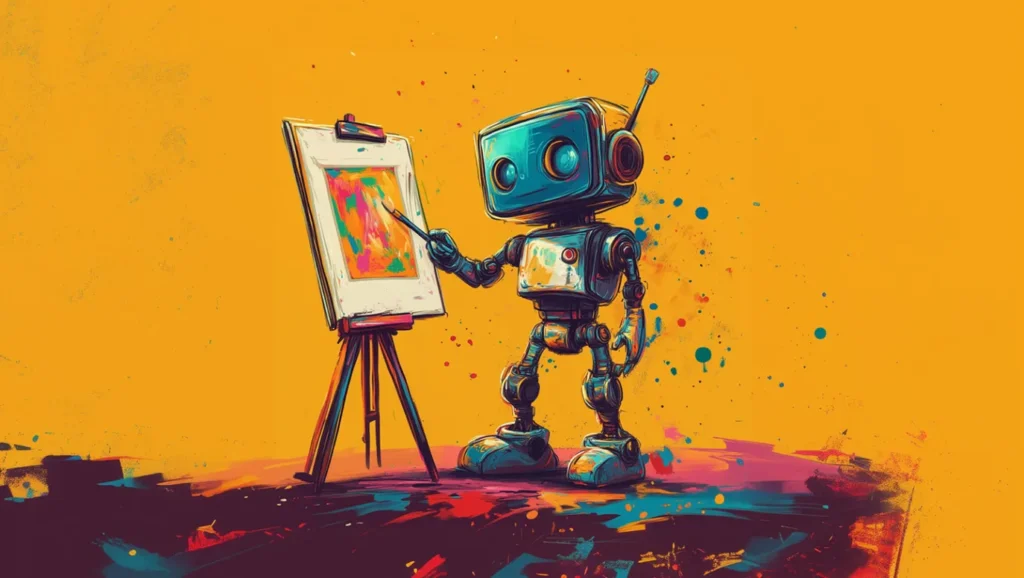
(The image in this post was created by Kathryn Hulick, Science News Explores author, using Midjourney)